JavaScript archives
Compatibility
CSS coaching
Thidrekssaga
QuirksBlog
Donations
Politics
Mobile
About
COH

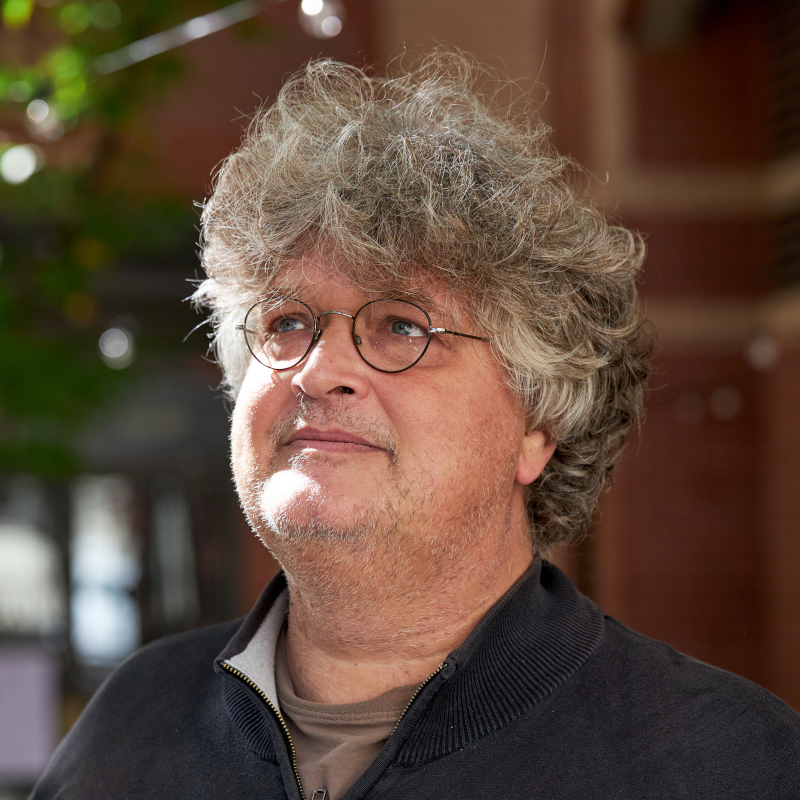
Photo by Roberto Vincitore.
QuirksMode.org is the site of Peter-Paul Koch. I am a web developer, browser researcher, consultant, and trainer in Amsterdam, the Netherlands. I am a freelancer. That means you can hire me.
Fact sheet:
In-house front-end engineering teams are sometimes seen as an extension of either the design department or the hard-core software development department. Front-end belongs in neither, instead striving to create a bridge between the two.
Front-end is different from design because it is programming. Front-end is different from other types of software development because your code must run on thousands of platforms instead of just one, and browsers are the most hostile development platforms in the world.
Demands made of the front-end team are often informed by design or back-end development principles. Although this is not always a bad thing, occasionally these demands make no sense from a front-end perspective, and cause the team to lose confidence in the rest of the organisation — especially if this sort of thing happens often.
I have ample experience with setting up, trouble-shooting, and managing a front-end engineering team, having done so first in 2000-2002. My job would be to figure out points of friction within the team, between the team and other parts of your organisation, and clarifying the purpose and methods of front-end engineering to managers, designers, and back-enders, as well as training the team members in the delicate art of advanced cross-browser compatible coding.
Interested? Get in touch.
Plenty of companies want web developers’ attention; not many know how to get it. Having been in the centre of professional web development since 1999, I can help you here.
Communicating with web developers is a specialised area of expertise — not because it’s very difficult, but because you need to know what makes web developers tick and acknowledge their fierce sense of independence.
Since I am a web developer in good standing, many web developers will listen to me when I talk about you or your outreach — once. We need to carefully craft that one message in order to make sure they continue to listen afterwards.
I specialise in assisting the developer relations outreach of browser vendors. My latest client was Samsung Internet, and I hope to represent other browser vendors — preferably less-well-known ones.
Interested? Get in touch.
Though I did not invent the browser compatibility table (Eric Meyer did), I have been doing fundamental browser compatibility research since 1999. In fact, most of the rest of my activities were enabled by my tireless publishing of compatibility tables.
I am aware that the global market for this service is limited, but if you happen to be tripped up by browser differences above the “solve this one bug” level — and particularly if it involves less well-known browsers such as UC or the mobile Chromia created by Android vendors — I can help you out.
Discounts apply if I can publish the research on this site.
Interested? Get in touch.
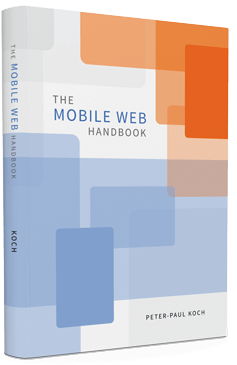
The Mobile Web Handbook, Smashing Magazine, 2014; my second book.
I have been writing technical articles about CSS and JavaScript since 2000, as well as two books, but I can always write more.
In addition to my blog I’ve written for A List Apart, Digital Web Magazine, Smashing Magazine, a few articles for Samsung Internet, as well as plenty of minor publications
My specialism is explaining tricky technical details in a way that a general web developer without previous knowledge of the topic can understand.
Interested? Get in touch.
Together with Krijn Hoetmer I have been organising specialised web development conferences since 2008. In that year I founded the still-running Fronteers conference. We went on to do Mobilism, one of the first two dedicated mobile web conferences, and nowadays our flagship conference is the annual CSS Day in June.
We occasionally organise conferences for large companies; notably the annual PhoneGap Day EU for Adobe. We might be interested in organising your conference as well, provided it has a clear connection to web development.
All of our conferences are held in Amsterdam, since I am a native and can easily select the best venues, bars, and so on. Besides, Amsterdam is a perfectly acceptable location for a European version of an American conference.
We need to be informed of your wishes nine to twelve months before the prospective conference date.
I regularly do workshops, focused especially on mobile browsers, browser compatibility, and specialised mobile topics such as the viewports. However, I can teach any basic or intermediate web development topic, as long as it does not involve frameworks or libraries.
I am currently developing a workshop “How to deal with browsers” that teaches people how to approach and solve browser bugs. (More information will follow later.)
Interested? Get in touch.
I’ve been a professional web development speaker since 2007. I am willing to speak at your conference, subject to availability and speaker fees. See my conference list for more information on my topics, or just ask me.
Meh.
The only type of website I’d be fascinated to build is a fairly simple one for obscure mobile browsers or older devices — say something aimed at the Indian market or an African one.
I stopped production work in 2007, mostly because I got tired of the bells and whistles for the sake of bells and whistles, and of the frameworks and libraries.
The other way of looking at this is that it would be interesting to create good, solid websites without any frameworks, libraries, bells, or whistles. If you happen to have one of those projects lying around I’d like to hear about them.
I know that’s not how web development works these days, though. So let’s just say your practical web development project would be a hard sell.
